Modern endodontics
PUBLISHED BY
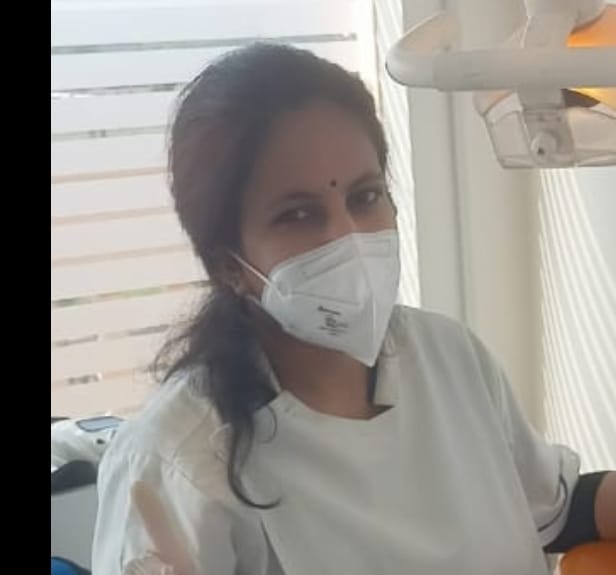
Dr. Bharti Kaushik
Single Sitting RCT: Complete Guide to Single-Visit Root Canal Treatment
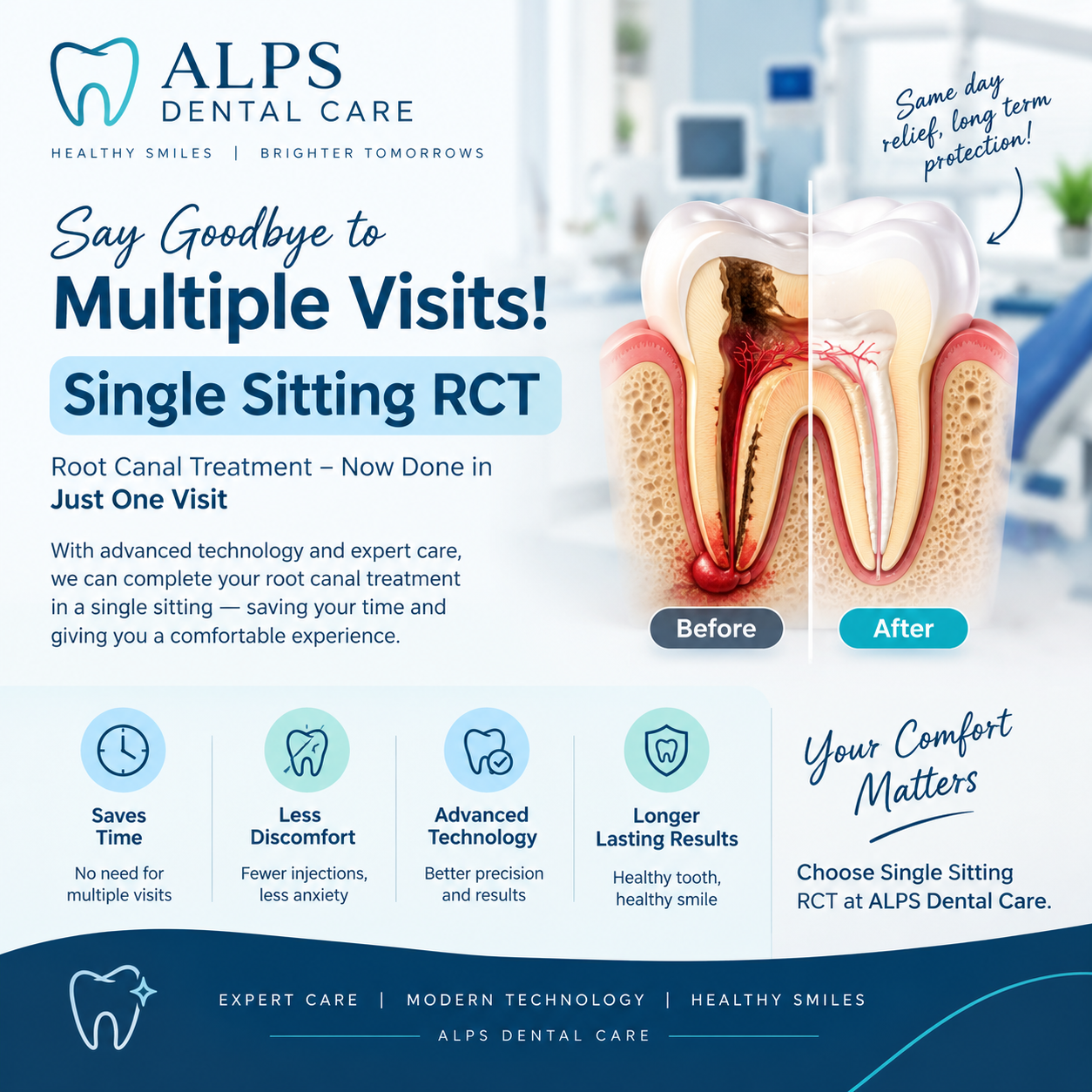
Single Sitting RCT (Root Canal Treatment) is an advanced endodontic treatment approach in which the cleaning, shaping, disinfection and root canal filling of a tooth can be completed in one appointment, when the clinical condition of the tooth allows it.
For patients with severe tooth pain, deep decay or an infected tooth, single-visit root canal treatment can provide an efficient way to save the natural tooth while reducing the number of dental appointments.
What Is a Single Sitting RCT?
A root canal treatment removes infected or inflamed pulp tissue from inside the tooth. The canals are carefully cleaned, shaped and disinfected before being sealed with a suitable root-filling material.
In a single sitting RCT, these essential stages are completed during one carefully planned appointment.
Modern endodontic techniques, rotary or reciprocating instrumentation, effective irrigation, magnification and digital imaging can help the dentist perform root canal treatment efficiently and precisely.
Who Can Benefit From Single Sitting Root Canal Treatment?
Single sitting RCT may be considered when:
- The tooth has irreversible pulp inflammation
- The canals can be adequately cleaned and disinfected
- The canals can be properly dried
- There is no uncontrolled swelling or drainage
- The tooth is suitable for complete treatment in one appointment
- The patient prefers fewer dental visits
However, not every root canal case should be completed in one sitting. Complex anatomy, persistent infection, significant swelling, difficult drainage, or other clinical factors may make multiple visits more appropriate.
Is Single Sitting RCT Safe?
When the case is appropriately selected and the treatment is performed using proper endodontic protocols, single-visit RCT can be a reliable treatment option.
Research comparing single-visit and multiple-visit root canal treatment has generally not demonstrated a clinically important difference in postoperative pain or overall treatment outcomes. However, treatment should always be individualized according to the tooth and the patient's clinical condition.
What Happens During a Single Sitting RCT?
A typical single-visit root canal procedure may involve:
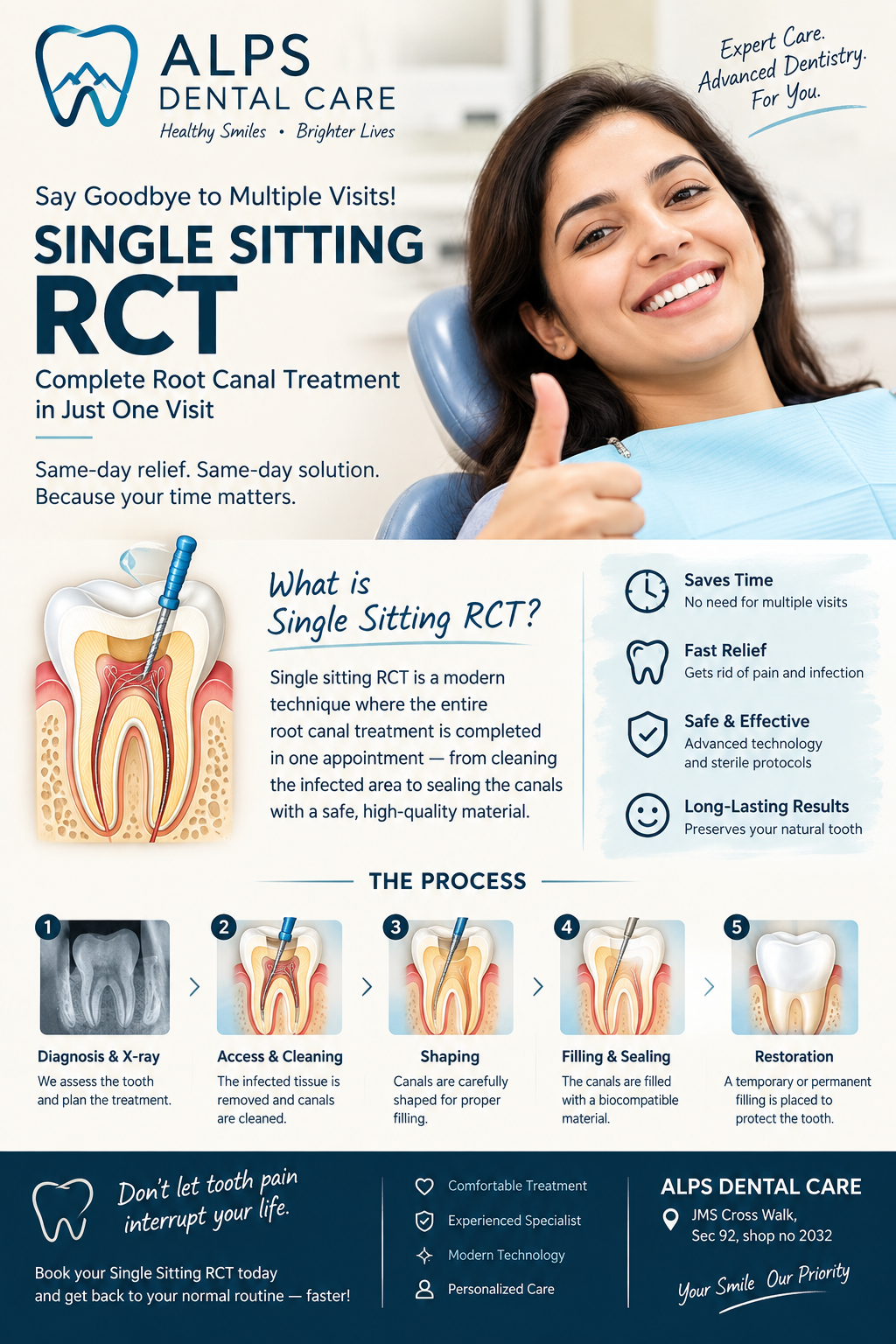
1. Diagnosis and Digital X-Ray
The tooth is examined clinically and radiographically to determine the extent of decay, infection and root canal anatomy.
2. Local Anaesthesia
The tooth is comfortably numbed before treatment begins.
3. Isolation
The tooth is isolated to maintain a clean and controlled treatment environment.
4. Access Opening
A small opening is made to gain access to the pulp chamber and root canals.
5. Cleaning and Shaping
The canals are carefully cleaned and shaped using appropriate endodontic instruments.
6. Irrigation and Disinfection
Specialised irrigation solutions are used to help eliminate microorganisms and debris from the root canal system.
7. Obturation
After appropriate cleaning and drying, the canals are filled and sealed.
8. Final Restoration
The tooth is restored to protect it from leakage and fracture. In many posterior teeth, a dental crown may be recommended after root canal treatment to provide additional protection.
Does Single Sitting RCT Cause More Pain?
Some discomfort or tenderness can occur after root canal treatment, but severe postoperative pain is uncommon.
Recent evidence suggests that postoperative pain is broadly similar between single-visit and multiple-visit root canal treatment, although individual experiences can vary depending on the diagnosis, infection, anatomy and treatment complexity.
Advantages of Single Sitting RCT
Potential advantages include:
- Fewer dental appointments
- Less time away from work or routine activities
- Faster completion of root canal treatment
- Earlier progression toward the final restoration
- Convenient option for patients with busy schedules
- Reduced need for temporary restorations between appointments
The main goal, however, should always be proper cleaning, disinfection and sealing of the root canal system—not simply completing treatment quickly.
Single Sitting RCT vs Multiple Visit RCT
Both approaches can be appropriate.
Single Sitting RCT Multiple Visit RCT Treatment completed in one appointment Treatment divided into two or more appointments Convenient for suitable cases Useful when additional treatment time is required Fewer appointments Allows reassessment between visits Faster progression to final restoration May be preferred in selected complex/infected cases Case selection is important Useful when canals cannot be appropriately completed in one visit The dentist should decide the treatment approach after examining the tooth rather than choosing a protocol based only on the number of appointments.
How Long Does a Single Sitting RCT Take?
The duration depends on the tooth and its anatomy.
A straightforward tooth may be completed in a single appointment, while a complex molar with multiple or curved canals may require more treatment time. The final restoration, such as a permanent filling or crown, is also an important part of protecting the treated tooth.
Is Single Sitting RCT Better Than Tooth Extraction?
If a tooth can be predictably restored, saving the natural tooth through root canal treatment is often preferable to extraction, because retaining the natural tooth can help maintain chewing function and avoid the need for tooth replacement.
The suitability of RCT depends on factors such as remaining tooth structure, periodontal condition, root anatomy and restorability.
Why Choose ALPS Dental Care for Root Canal Treatment?
At ALPS Dental Care, root canal treatment is planned according to the individual tooth and patient's needs.
Our approach focuses on:
- Accurate diagnosis
- Digital dental imaging
- Modern endodontic techniques
- Careful canal cleaning and disinfection
- Precise root canal filling
- Proper final restoration
- Patient comfort and communication
Frequently Asked Questions
Can every RCT be completed in one sitting?
No. Single sitting RCT is suitable for selected cases. Some teeth require multiple visits depending on infection, swelling, drainage, anatomy and other clinical factors.
Is single sitting RCT painless?
Modern local anaesthesia makes the procedure comfortable for most patients. Mild tenderness after treatment can occur.
How many hours does single sitting RCT take?
Treatment time varies according to the tooth and complexity. Some cases can be completed in one appointment, while complex cases may require more time.
Does a root canal-treated tooth need a crown?
Many heavily restored or posterior teeth benefit from a crown or other cuspal-protective restoration. The final restoration should be decided according to the amount of remaining tooth structure and functional requirements.
Can an infected tooth be treated in one sitting?
Sometimes yes, but not every infected tooth is suitable for single-visit treatment. The dentist must evaluate the infection, drainage, symptoms and canal conditions before deciding.
Conclusion
Single Sitting RCT is a modern and convenient approach to root canal treatment for appropriately selected cases. It can reduce the number of dental appointments while providing effective treatment when proper cleaning, disinfection and sealing can be achieved in one visit.
The priority should always be quality endodontic treatment and long-term tooth preservation—not simply fewer appointments.
If you have tooth pain, sensitivity, deep decay or a previously treated tooth that is causing discomfort, an examination and dental X-ray can help determine whether single sitting RCT or multiple-visit treatment is appropriate.
ALPS Dental Care – Professional Root Canal Treatment with a focus on precision, comfort and long-term tooth preservation.
"Clinical excellence is not just about state-of-the-art equipment—it's about the precision of care and the empathy of the provider."
Dr. Bharti Kaushik, Founder